

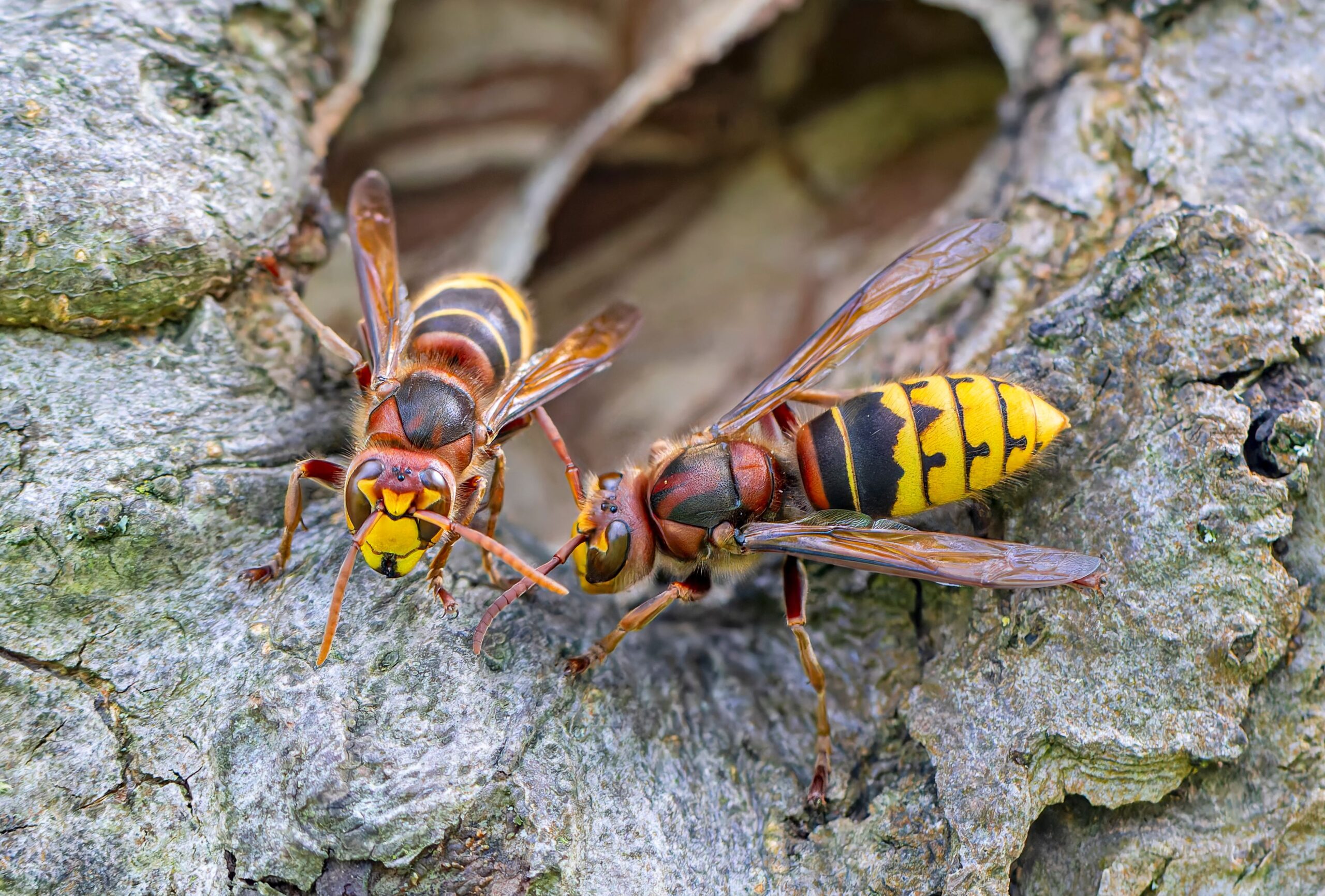
Why Are Wasps So Aggressive in September? What You Need to Know
If you’ve noticed more wasps around your home, garden, workplace or outdoor seating area recently, you’re not imagining it.
September is one of the busiest times of year for wasp activity in the UK, and wasps can seem noticeably more persistent and aggressive as summer comes to an end.
This can be particularly noticeable around patios, gardens, bins, outdoor food and drink, fallen fruit and entrances to buildings.
But why does wasp behaviour change at this time of year? And if you’ve discovered a nest on your property, should you leave it alone or arrange professional treatment?
Why are wasps more aggressive in September?
A wasp colony behaves differently towards the end of summer.
During the earlier part of the season, worker wasps spend much of their time collecting protein to feed the developing larvae inside the nest. As the colony reaches maturity, the queen’s role changes and the nest begins producing new queens and males.
The workers no longer have the same role of feeding developing larvae.
This changes their behaviour.
They increasingly search for sugary food sources, which is why you may suddenly find wasps around:
- Fallen and overripe fruit
- Fizzy drinks and juice
- Outdoor food
- Sweet foods
- Food waste and bins
- Pub gardens and outdoor cafés
- Picnic areas
The colony can also be at its largest during late summer and early autumn, meaning there are simply more wasps around.
According to Oxford City Council, wasp nests typically reach their peak size and activity during August and September, with some nests containing thousands of individuals.
What are 'tipsy wasps'?
You may also have heard the phrase “tipsy wasps” in the news recently.
As autumn approaches, wasps are increasingly attracted to sugary and fermenting fruit. Fallen apples, plums, pears and other fruit can begin to ferment naturally, creating a sugary food source that attracts wasps.
This can result in wasps gathering around fruit trees and becoming more noticeable in gardens.
It doesn’t mean every wasp you see is literally intoxicated, but fermented fruit can contribute to unusual or erratic behaviour and bring wasps into much closer contact with people.
For homeowners, the practical lesson is simple: Don’t leave fallen fruit lying around if you want to reduce wasp activity in your garden.
Does seeing lots of wasps mean there's a nest nearby?
Not necessarily.
Wasps can travel considerable distances while foraging, so seeing several wasps around a garden doesn’t automatically mean there is a nest on the property.
However, if you are seeing large numbers of wasps repeatedly entering and leaving the same point, there may be a nest nearby.
Look around areas such as:
- Loft spaces
- Roof eaves
- Fascias and soffits
- Sheds and garages
- Wall cavities
- Under decking
- Porches
- Garden buildings
- Bird boxes
- Around vents and other openings
A steady stream of wasps disappearing into one particular hole or gap is a good indication that there may be a nest hidden inside a cavity.
What does a wasp nest look like?
Wasp nests aren’t always obvious. Some are easy to spot, particularly when they’re hanging from a roof space or garden structure. Others can be completely hidden inside a wall cavity, loft or other enclosed area.
You may notice the wasps before you ever see the nest itself. If you suddenly have large numbers of wasps appearing inside your home, particularly around windows, ceilings, loft areas or light fittings, this could indicate that a nest is located within the building.
Should you remove a wasp nest yourself?
It’s generally not advisable to disturb an active wasp nest yourself. A mature colony can contain thousands of wasps, and disturbing the nest can trigger defensive behaviour.
Unlike honey bees, female wasps can sting repeatedly. Trying to knock down, block or spray an active nest can therefore create considerably more risk than dealing with the problem professionally.
Professional pest controllers can assess the location of the nest and select an appropriate treatment method based on where it is situated.
What should you do if wasps are entering your home?
If you’re finding wasps indoors, don’t automatically assume that killing individual wasps will solve the problem.
The important question is: Where are they coming from?
If there is an active nest inside a loft, wall cavity or roof space, killing individual wasps won’t address the source.
Instead:
- Avoid disturbing the suspected nest.
- Keep children and pets away from the area.
- Keep food and sweet drinks covered.
- Secure household waste and bins.
- Remove fallen fruit from the garden.
- Don’t block the entrance to a suspected nest.
- Arrange professional advice if there is an active nest in or around the property.
When should you call pest control for wasps?
Professional treatment is particularly sensible when a nest is located somewhere where people are likely to disturb it.
This could include:
- Near a front or back door
- Above a patio
- Close to children’s play areas
- Inside a loft
- In a wall cavity
- Around a workplace entrance
- Near outdoor seating
- Close to pets or livestock
- Anywhere someone has already been stung
For businesses, wasps can also become a customer and employee safety issue, particularly for hospitality, retail, schools, care settings and other premises where people are regularly moving around outside.
What happens to wasp nests in autumn?
As temperatures continue to fall, the colony will naturally decline.
The original queen dies, along with the worker wasps and males. Newly produced queens survive by finding sheltered places to spend the winter before emerging the following spring.
Importantly, wasps do not reuse an old nest the following year. A new queen will establish a new nest rather than moving back into the old one.
That doesn’t mean an active nest should simply be ignored, however.
If it is currently creating a risk to people or animals, waiting for the colony to die naturally could mean putting yourself and others at unnecessary risk for several more weeks.
How can you reduce wasp activity around your property?
There are a few simple things you can do:
Keep food and drinks covered
Wasps are particularly attracted to sugary food and drinks during late summer and early autumn.
Keep cans, bottles, food and leftovers covered when eating outside.
Secure your bins
Make sure bin lids are properly closed and clean up any food waste around the outside of the bin.
Clear fallen fruit
If you have fruit trees, collect fallen fruit regularly before it becomes overripe and starts fermenting.
Check buildings
Inspect sheds, garages, loft spaces, rooflines and other sheltered areas for signs of wasp activity.
Don’t disturb nests
If you’ve identified a nest, don’t poke, block or knock it down.
Getting the problem assessed professionally is considerably safer.
Need help with a wasp nest?
Wasp activity naturally increases during late summer and early autumn, but that doesn’t mean you have to put up with an active nest on your property.
Vector Pest Control provides professional pest control services for homes and businesses across West Yorkshire, North Yorkshire, East Lancashire, South Yorkshire, Manchester, with extended coverage across the rest of the UK.
If you’ve found a wasp nest or are seeing increasing numbers of wasps around your property, contact Vector Pest Control for professional advice and treatment.
Don’t wait until a nest becomes a bigger problem. Contact Vector Pest Control today.